
SUMMARY
PREVALENCE: Uncommon
ACTIVE PERIOD: Active at night
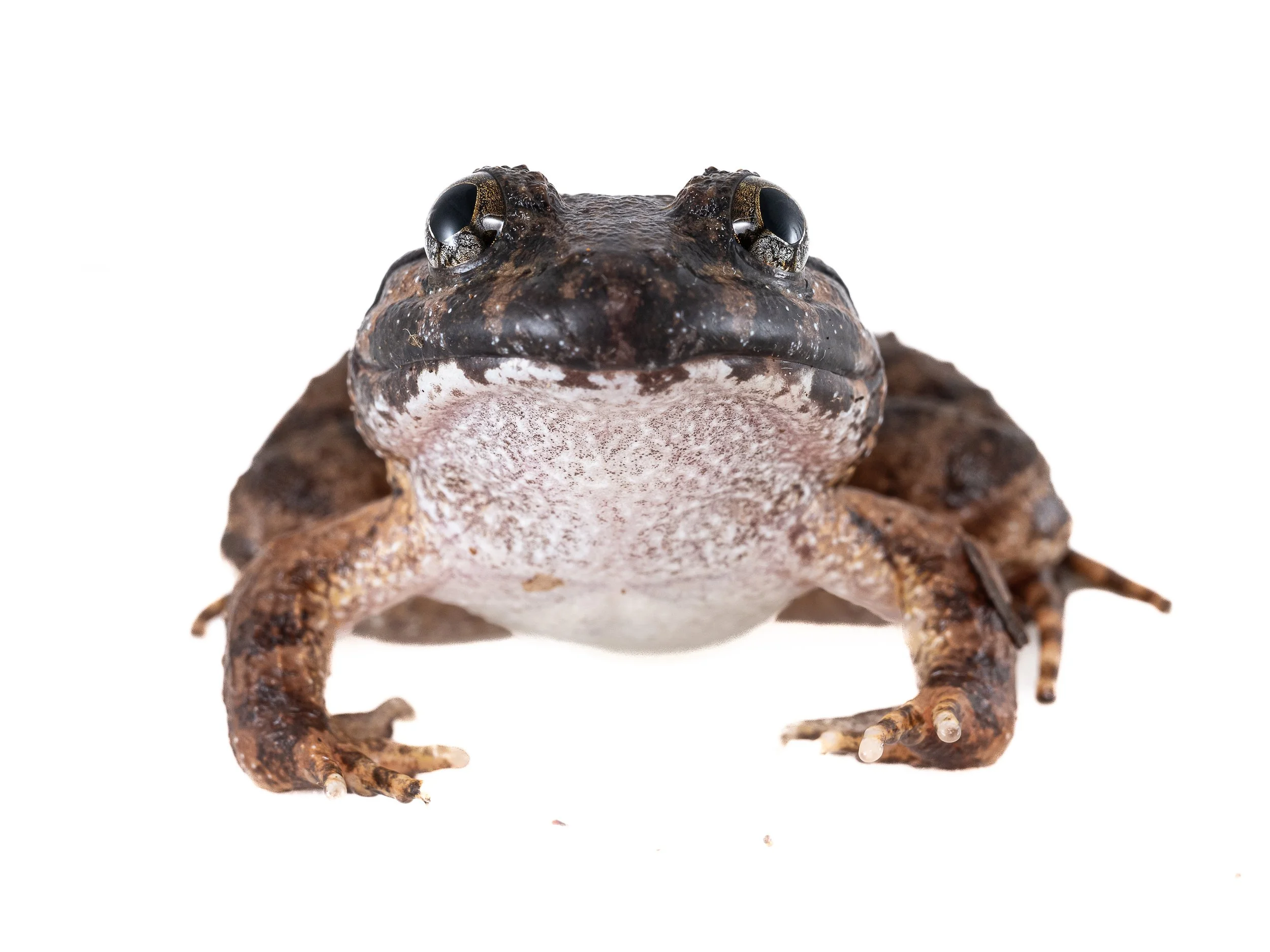
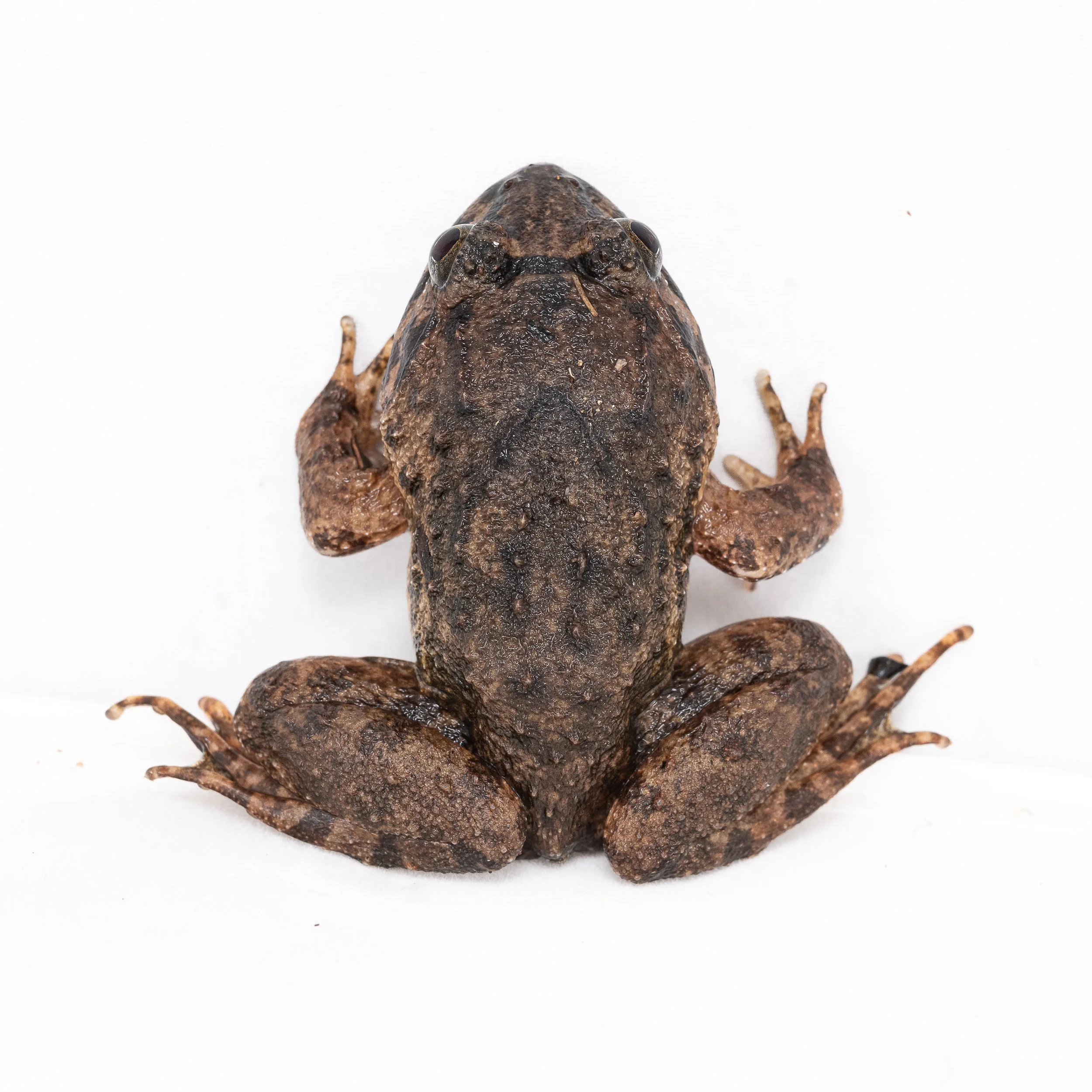
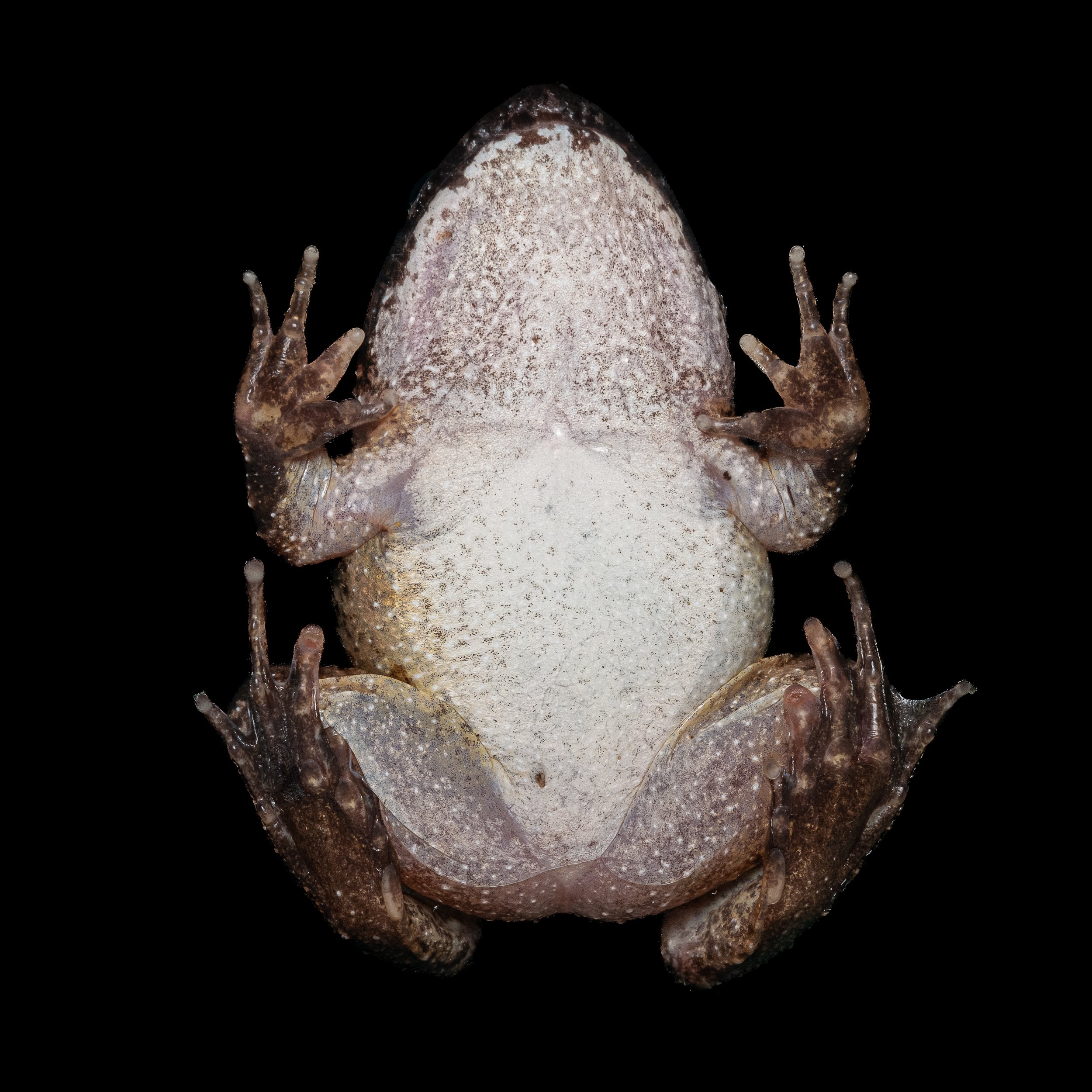
KEY ID FEATURES: Head wider than body in males, same or slightly wider than body in females, white venter
SIZE: ~7cm
IUCN: LC - Least Concern
GALLERY
IMPORTANT: Many frogs have significant variance in coloration and pattern even within the same species. There can also be extreme differences in appearance from juveniles to adults and some species appear very similar in maturity.
DESCRIPTION
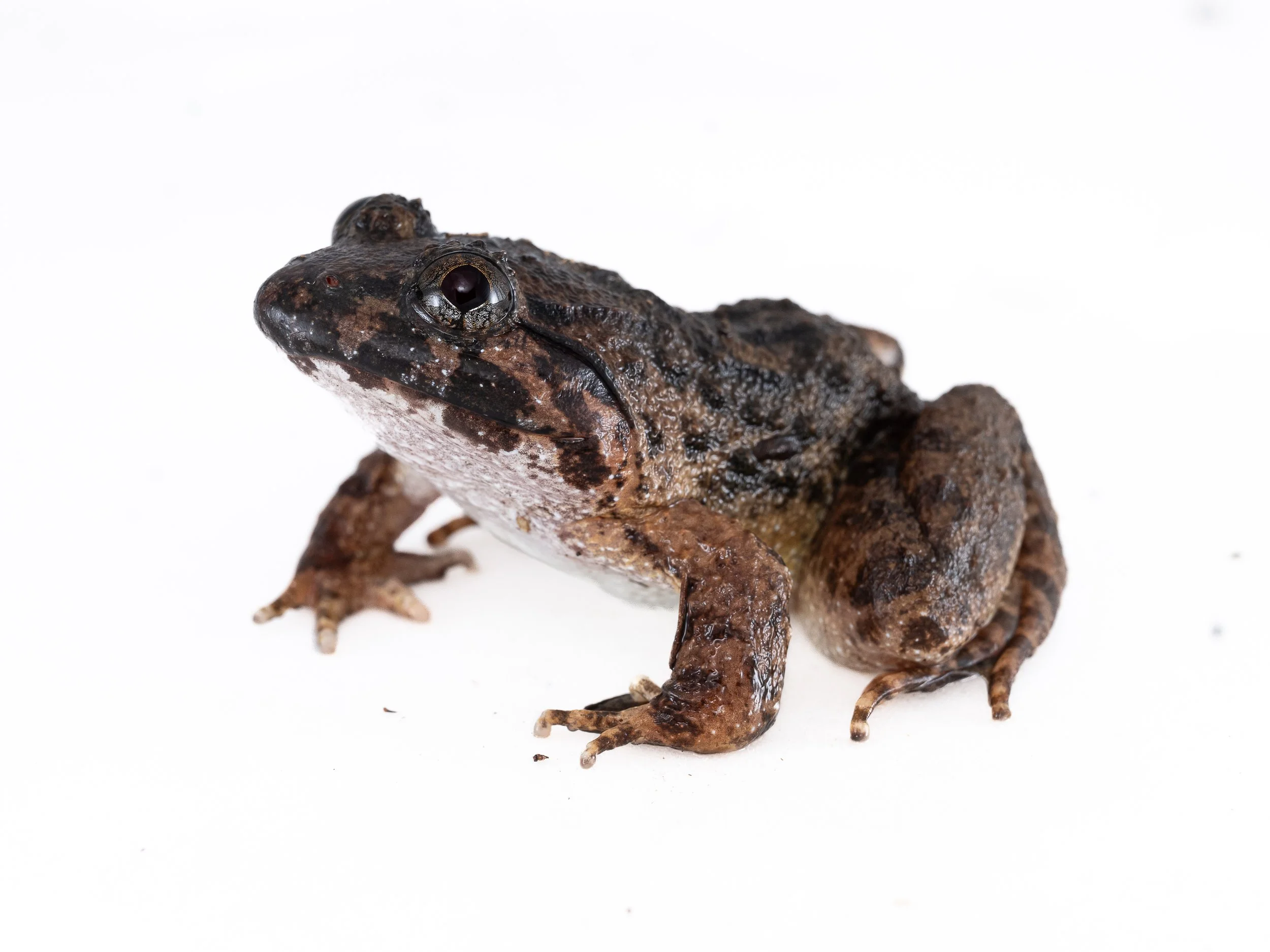
As their name indicates, their heads are wide relative to the body, a feature that is more pronounced in males than in females, and most noticeable in both when observing the animal from directly overhead. For females the head at its widest section is roughly as wide as the body at mid section, whereas males heads are visibly wider than the body at midsection. Males also posses highly developed fang-like boney projections on the lower jaw that are either highly reduced or completely absent in females. The eyes have a distinct cross shape with brown or orange colored iris above and white and orange below. Distance from the front of the eye to the tip of the snout is ~1.5 times the diameter of the eye. The head is roughly triangular in shape with a slight curvature.
They are light to dark brown in color with dark brown bands or blotches on the forearms, partial banding on the hindlimbs, some dark blotching on the back, with dark blotches on the upper and lower jaw. Big-headed frogs have a characteristic black band between the two eyes on top of the head and a unique black “W” on the on the anterior portion of the dorsum. The tympanum is not obvious.
This species also has a characteristic white venter with some sparse brown mottling under the chin. The white on the chin creates a high contrast with the dark brown or black blotches on the lower jaw. There is a light yellow coloration dorsolaterally near the joint where the hindlimbs meet the body. The body is also covered in widely spaces rounded tubercles or bumps that are slightly more concentrated dorsolaterally and largely absent from the head, only appearing above the eyes, and limbs where rough skin or small tubercles may also be present. These tubercles are also more prominent on males than females. The underlying skin on the dorsum is rugose.
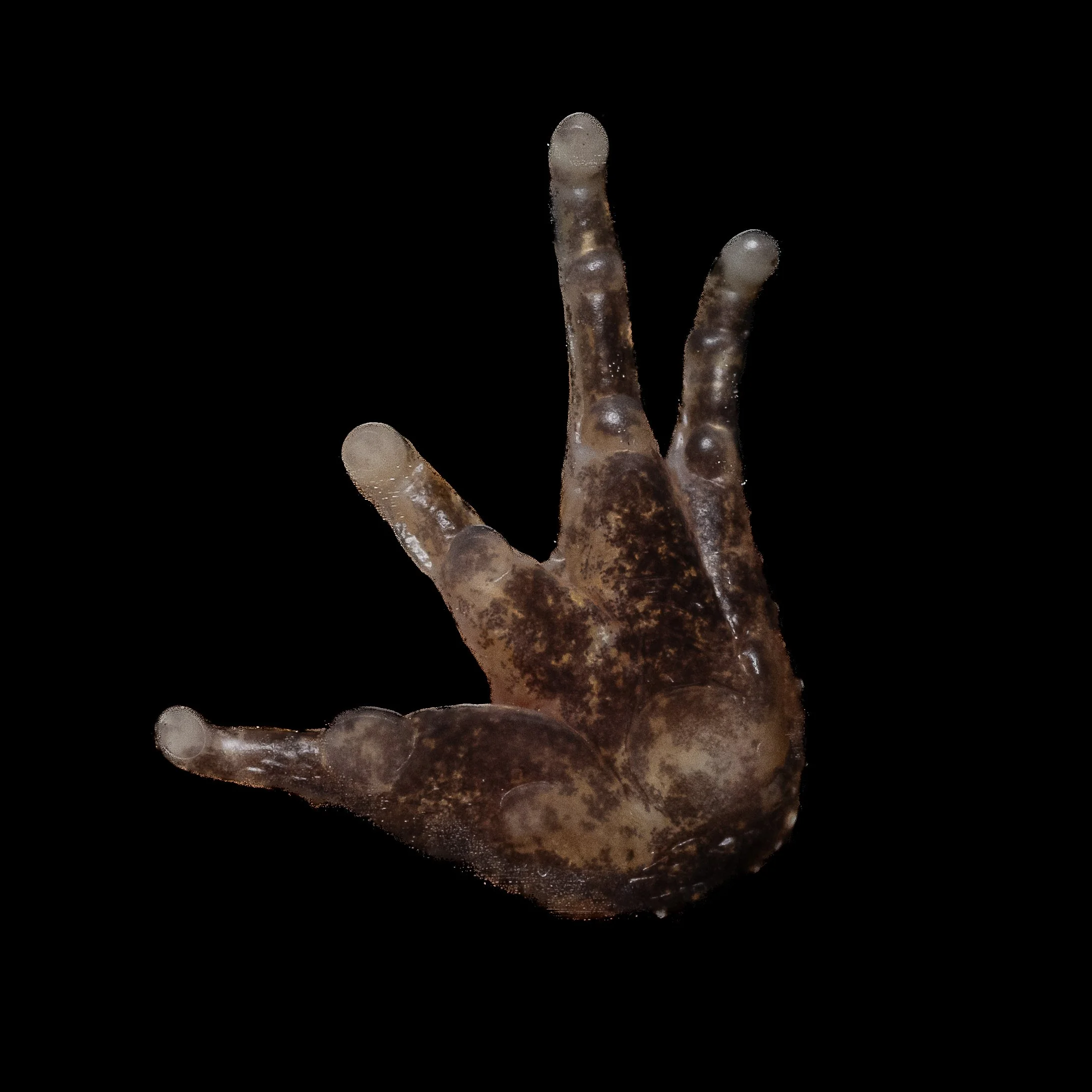
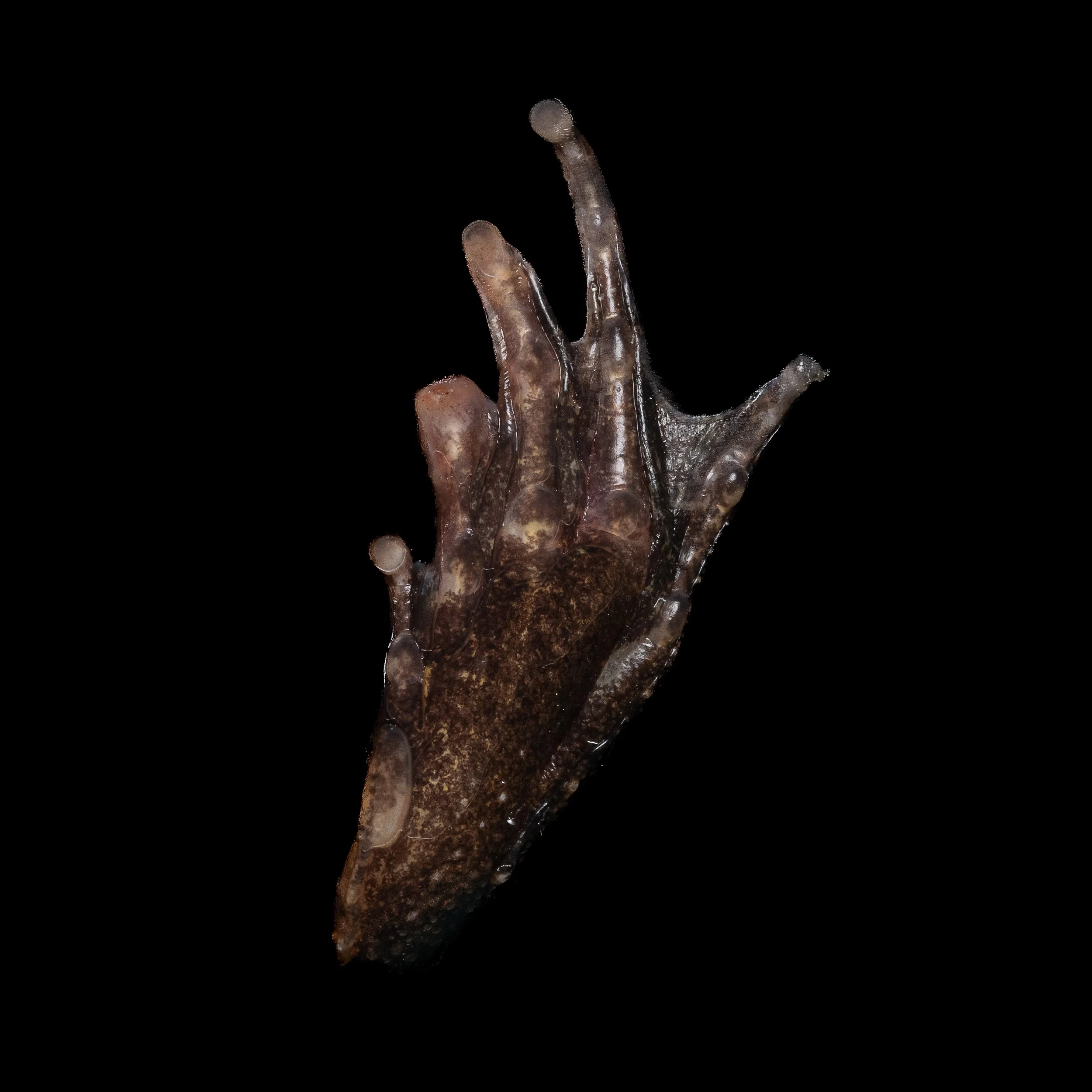
They have four digits on the forelimbs with the second being proportionally shorter and no webbing. On the hindlimbs all digits are nearly fully webbed with the exception of the fourth which is partially webbed.
HABITAT
The big-headed frog is an uncommon species in Hong Kong due to its relatively restricted range, but is possible to find with relative ease in the areas it inhabits. They are often found in clear flowing streams or sometimes in catch waters that run adjacent to suitable habitat.
MISTAKEN IDENTITY
CAUTION SHOULD TAKEN WHEN INTERACTING WITH AMPHIBIANS: The big-headed frog can be confused with the lesser-spiny frog. Key differentiators are the more densely packed tubercles and granules on the posterior of the lesser-spiny frog, the white venter of the big-headed frog, the light stripe on the snout of the lesser-spiny, males lesser spiny frogs developing black spines on thier chest and forelimbs during mating season and the head of the males big-headed frog being much wider than the body.