
SUMMARY
PREVALENCE: Uncommon
ACTIVE PERIOD: Active at night
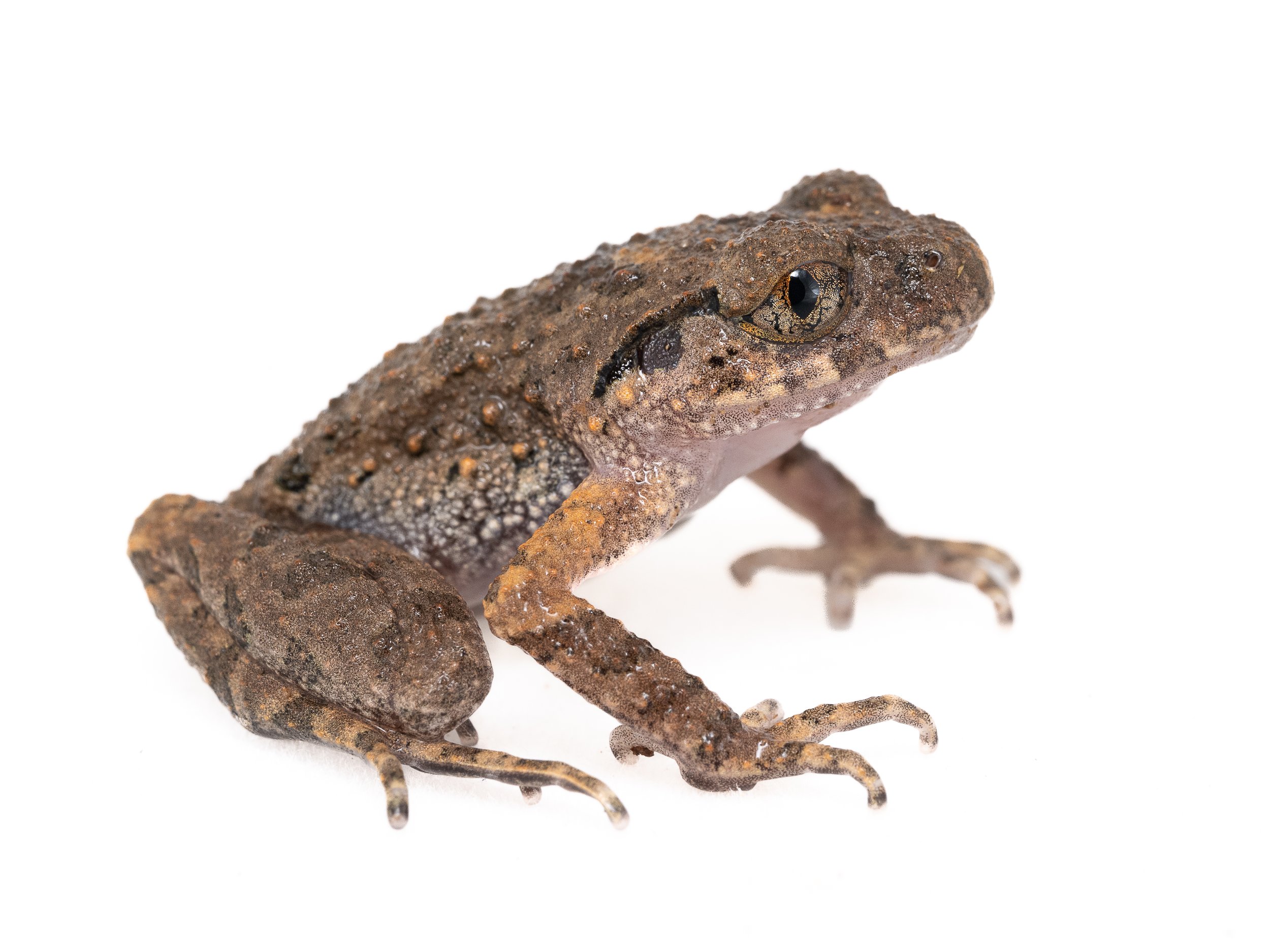
KEY ID FEATURES: Yellow or orange upper arms, curved eye lid
SIZE: ~3cm
IUCN: V - Vulnerable
GALLERY
IMPORTANT: Many frogs have significant variance in coloration and pattern even within the same species. There can also be extreme differences in appearance from juveniles to adults and some species appear very similar in maturity.
DESCRIPTION
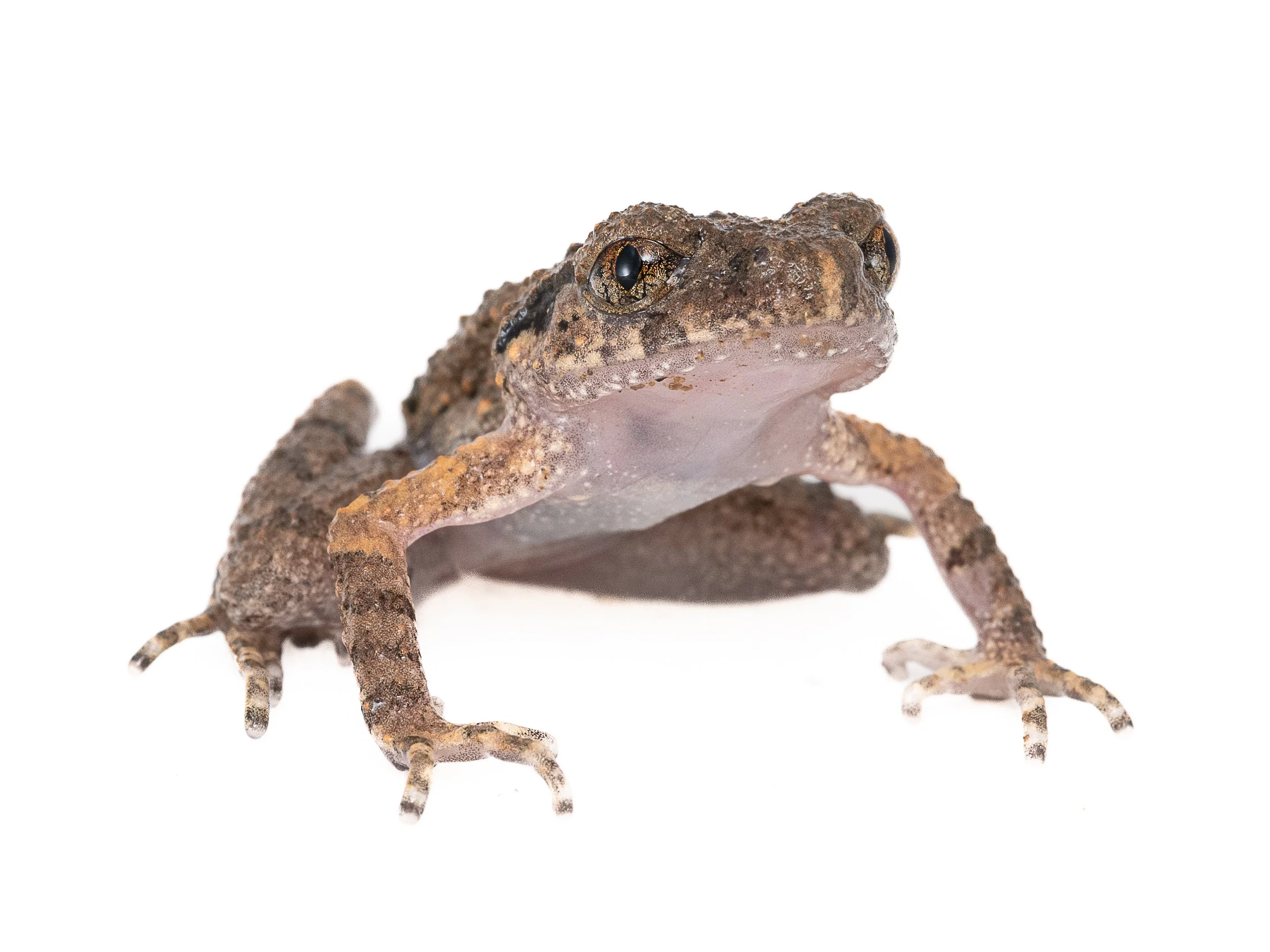
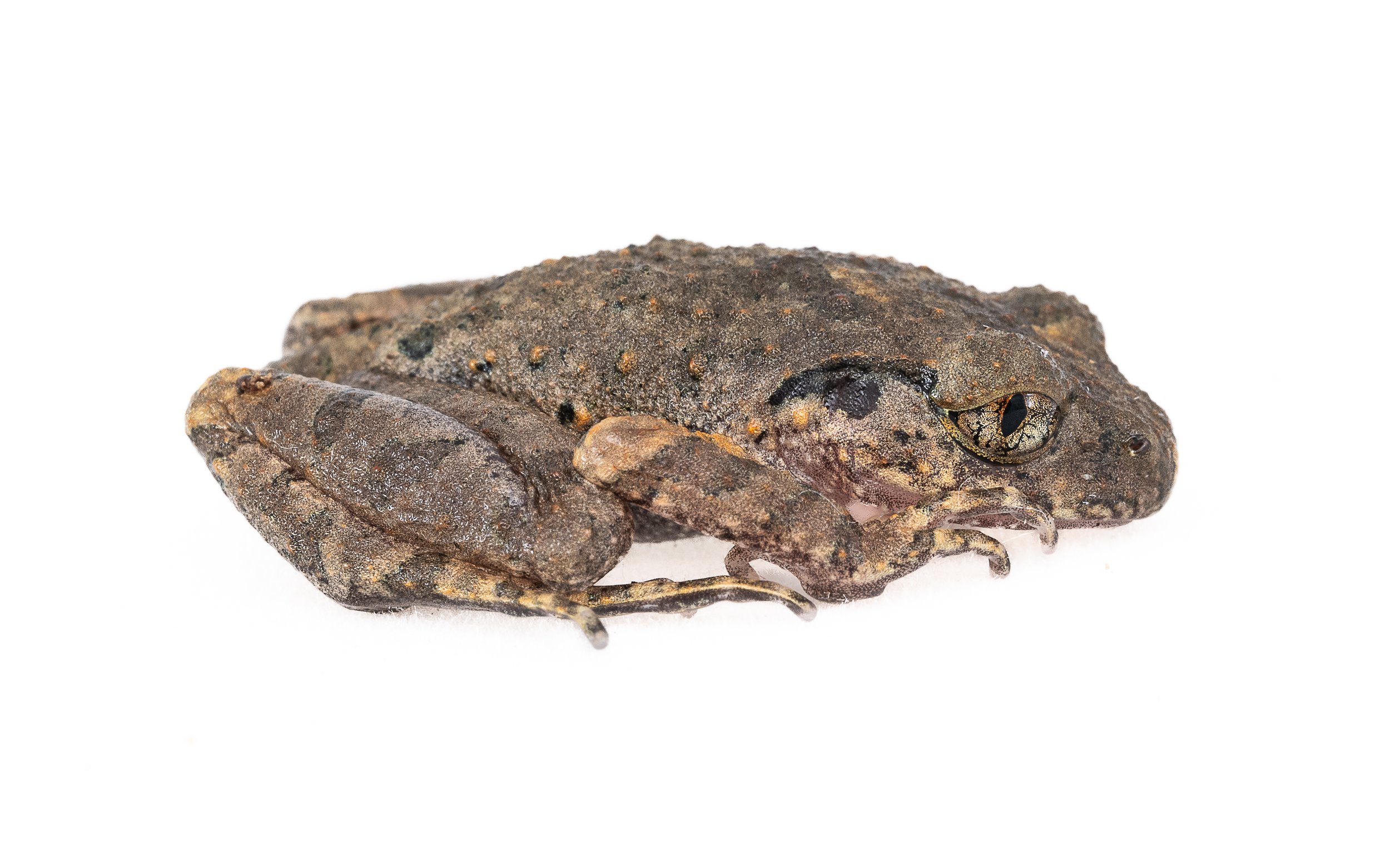
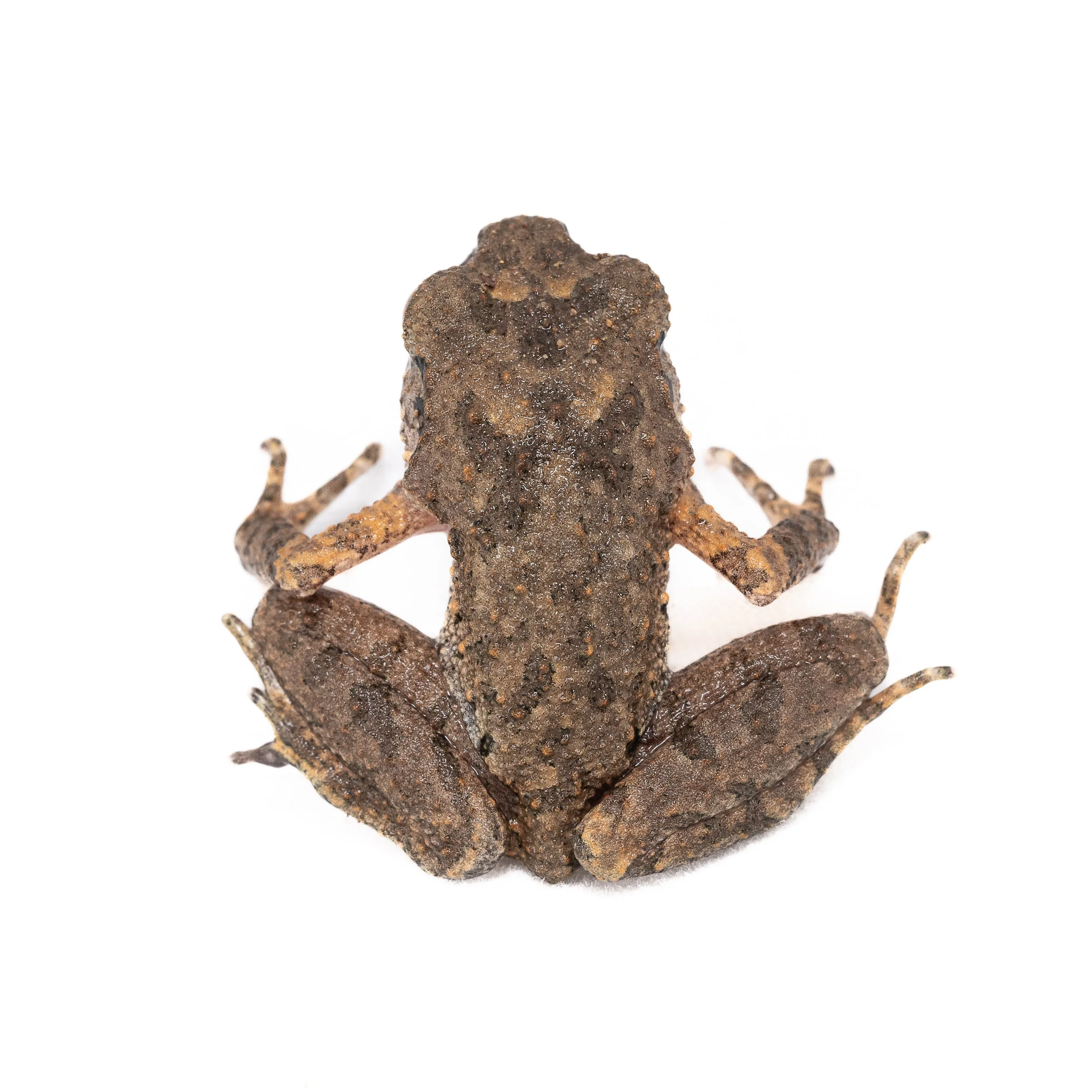
Often brown or grey-brown in color with rounded tubercles and granules covering the body and granules and wrinkles on the limbs. Dark blotches can be found on the back with wide blotches in irregular shapes on the top and back of the head. They have partial banding on the hind and forelimbs. A skin fold runs from behind each eye, over the tympanum and terminating just after. The lower edge of the skin fold and part of the upper region of the tympanum is black or a darker shade of brown in color. The head is wider than the body with a short snout that is squared off between the nostrils. Eyes are large relative to the head and pupils are oval in shape. The eye lid curves gracefully creating a “lazy” expression when viewed closely. Forelimbs are very thin with highly characteristic yellow or light orange coloration on the upper portion of each limb.
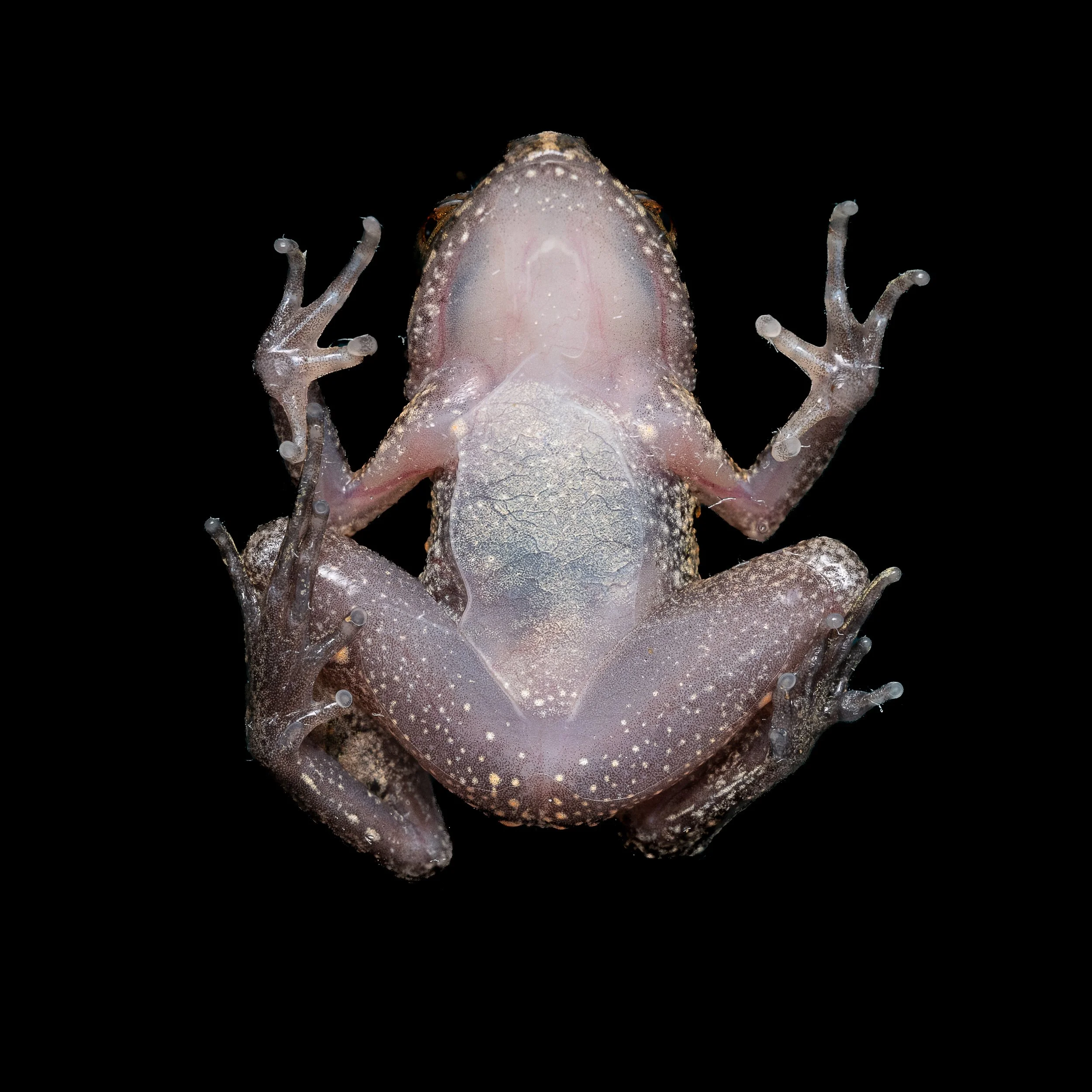
Lau’s leaf-litter toad has a white semitransparent chin and belly with small white or light yellow spots on the belly, edges of the chin and the hindlimbs. They also have highly characteristic white spots on the chest at the joint between the forelimb and body.
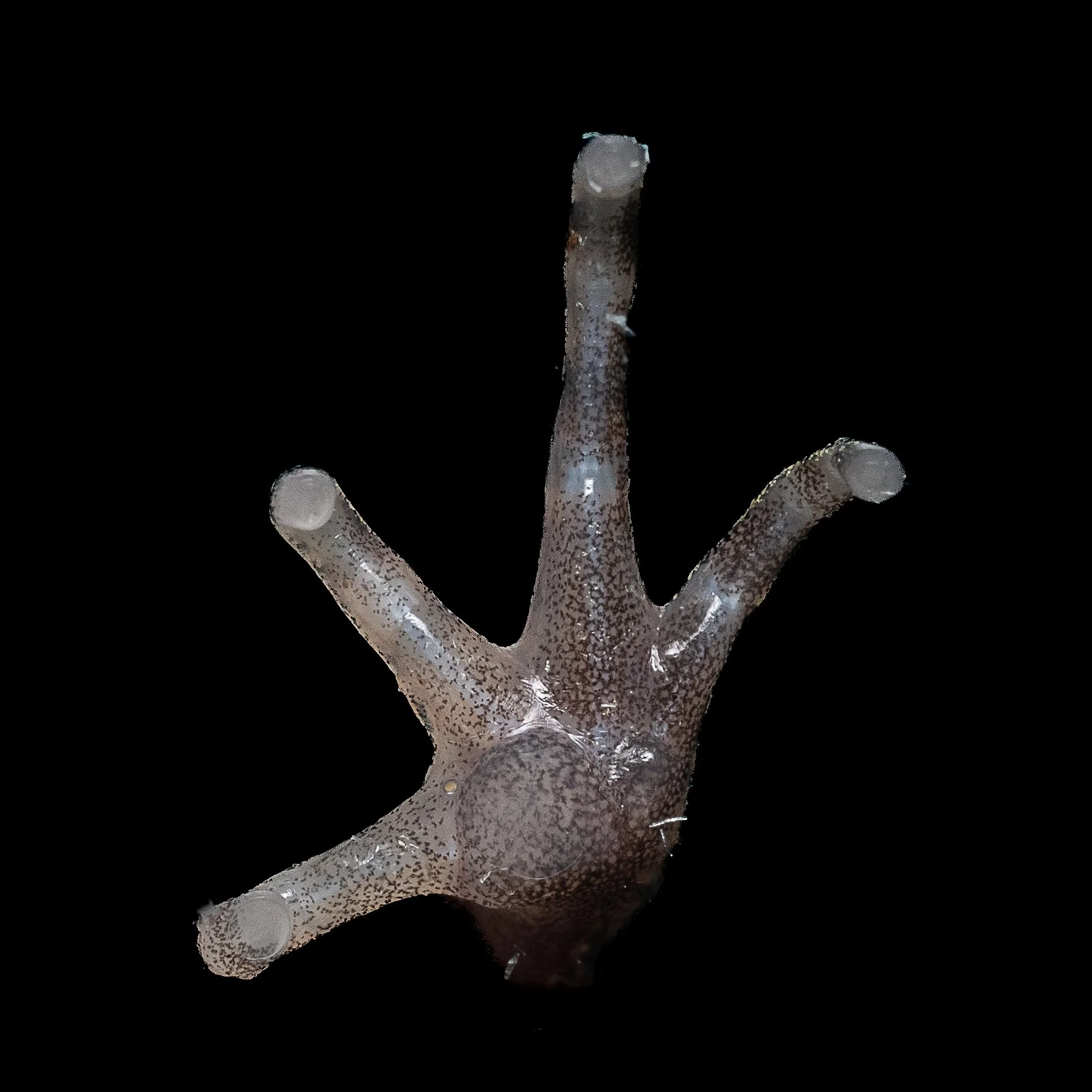
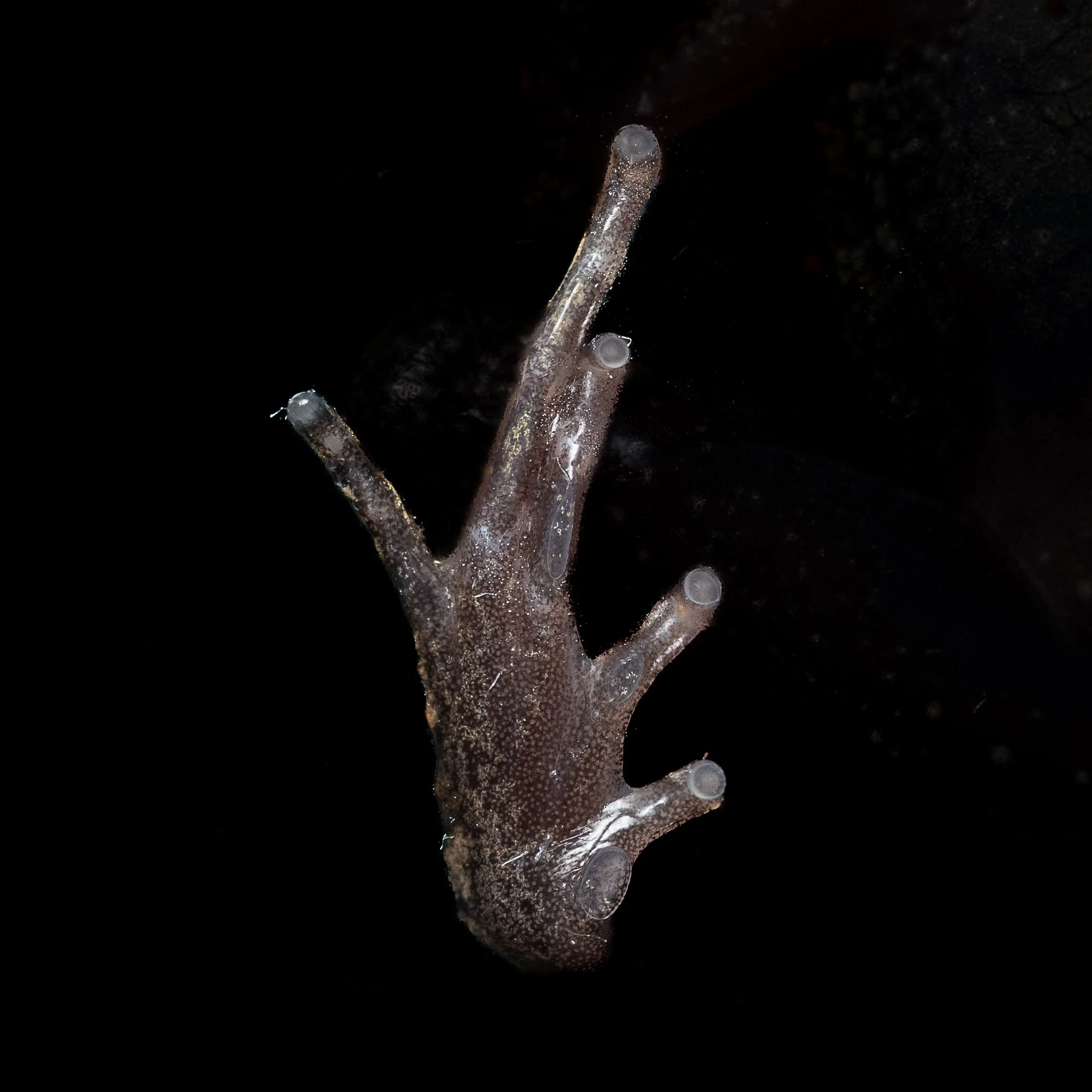
This species has four long, thin digits on the forelimbs with no webbing. They have five digits on the hindlimbs with barely discernible, minimal webbing, which is diagnostically unique to Lau’s and the short-legged horned frog in terms of how extensively reduced it is.
HABITAT
Despite its relatively wide range, Lau’s leaf-litter toad is an uncommon encounter due to its diminutive size, camouflage, and its largely terrestrial nature. Lau’s can be found at mid to high elevation, normally in pristine habitat on the forest floor within proximity to streams.
MISTAKEN IDENTITY
CAUTION SHOULD TAKEN WHEN INTERACTING WITH AMPHIBIANS: Lau’s leaf-litter toad can easily be confused with a juvenile Asian common toad. The most distinguishing feature between the two animals is the yellow or light orange coloration on the upper forelimbs of the Lau’s leaf litter toad which is absent on the Asian common toad. The Asian common toad also has large parotoid glands on the back of the head which are absent on the Lau’s. In addition, the Asian common toad has bony ridges on the head and snout whereas the Lau’s does not. The Lau’s has highly reduced webbing on the hindlimb feet, whereas the Asian common toad is mostly webbed. Finally, the similar appearance only applies to juvenile Asian common toads as they are many times the size of a Lau’s when mature.