
SUMMARY
PREVALENCE: Uncommon
ACTIVE PERIOD: Active at night
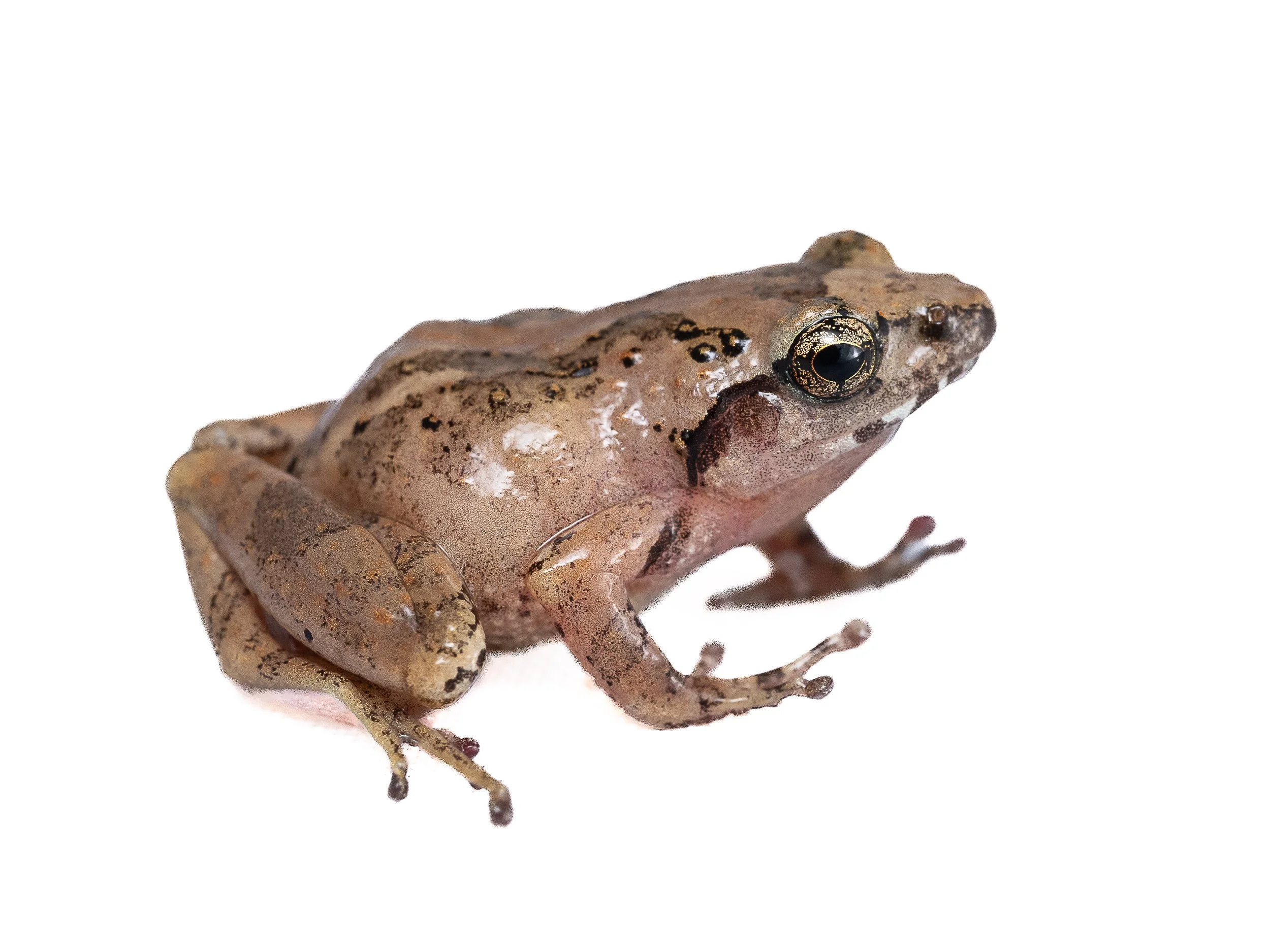
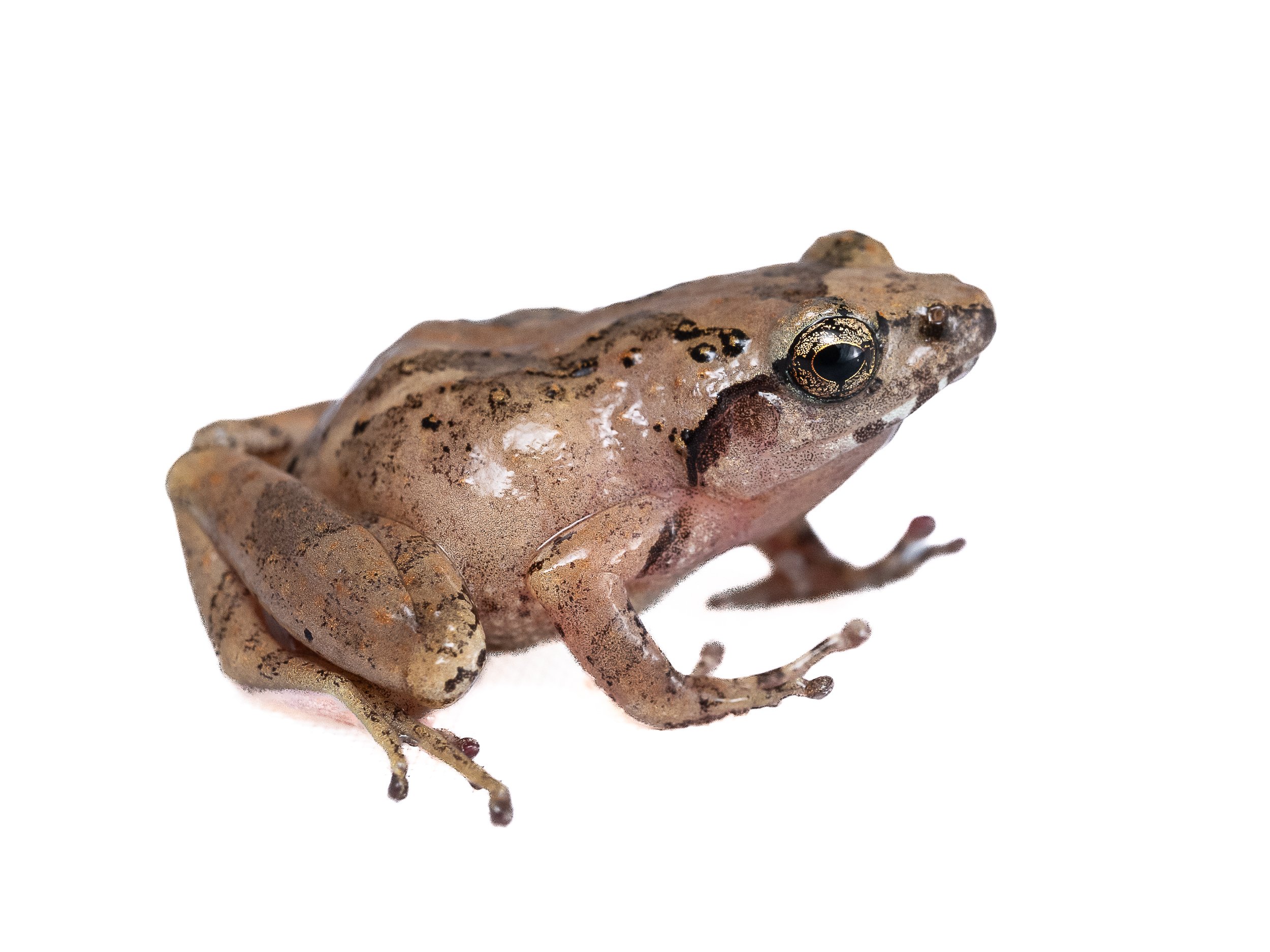
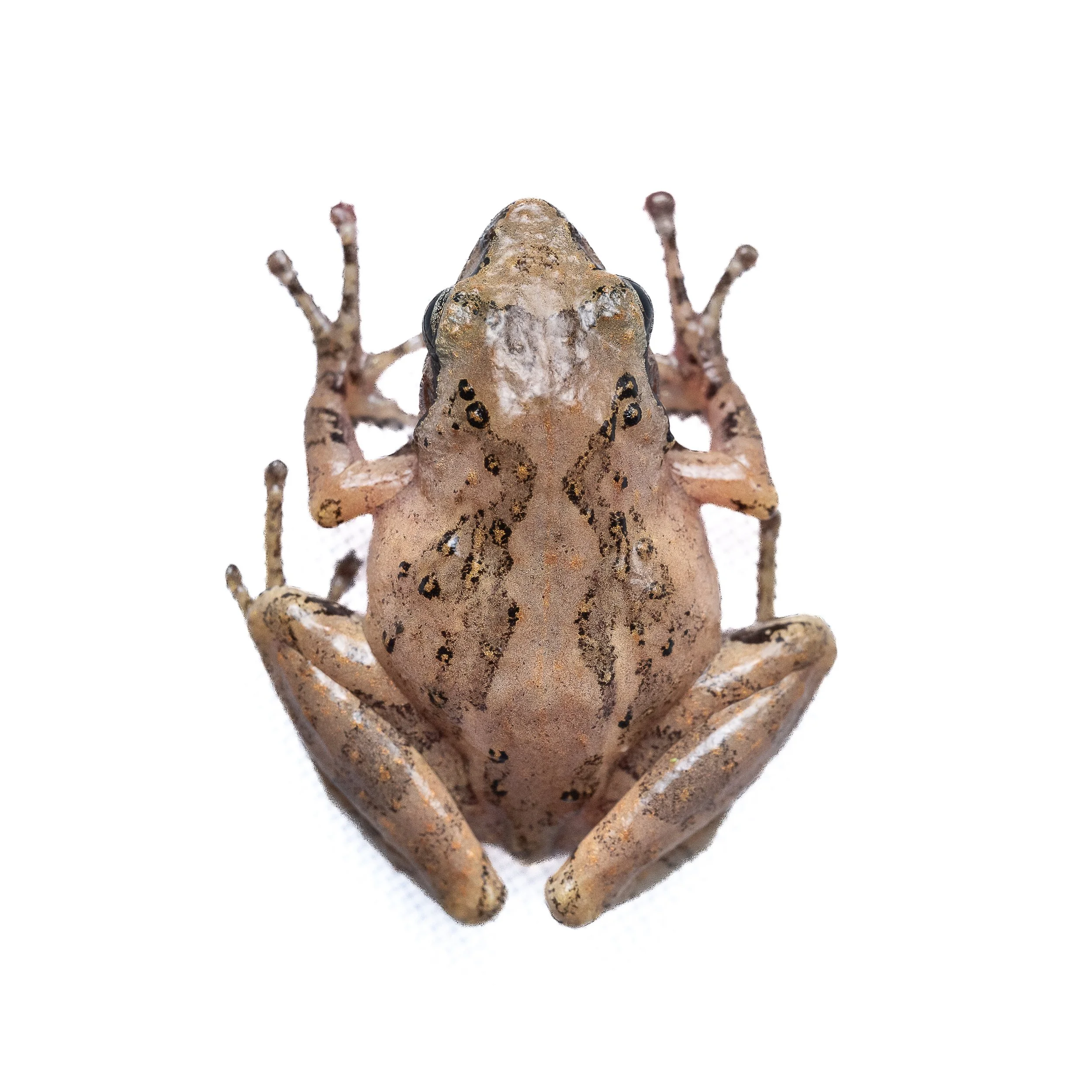
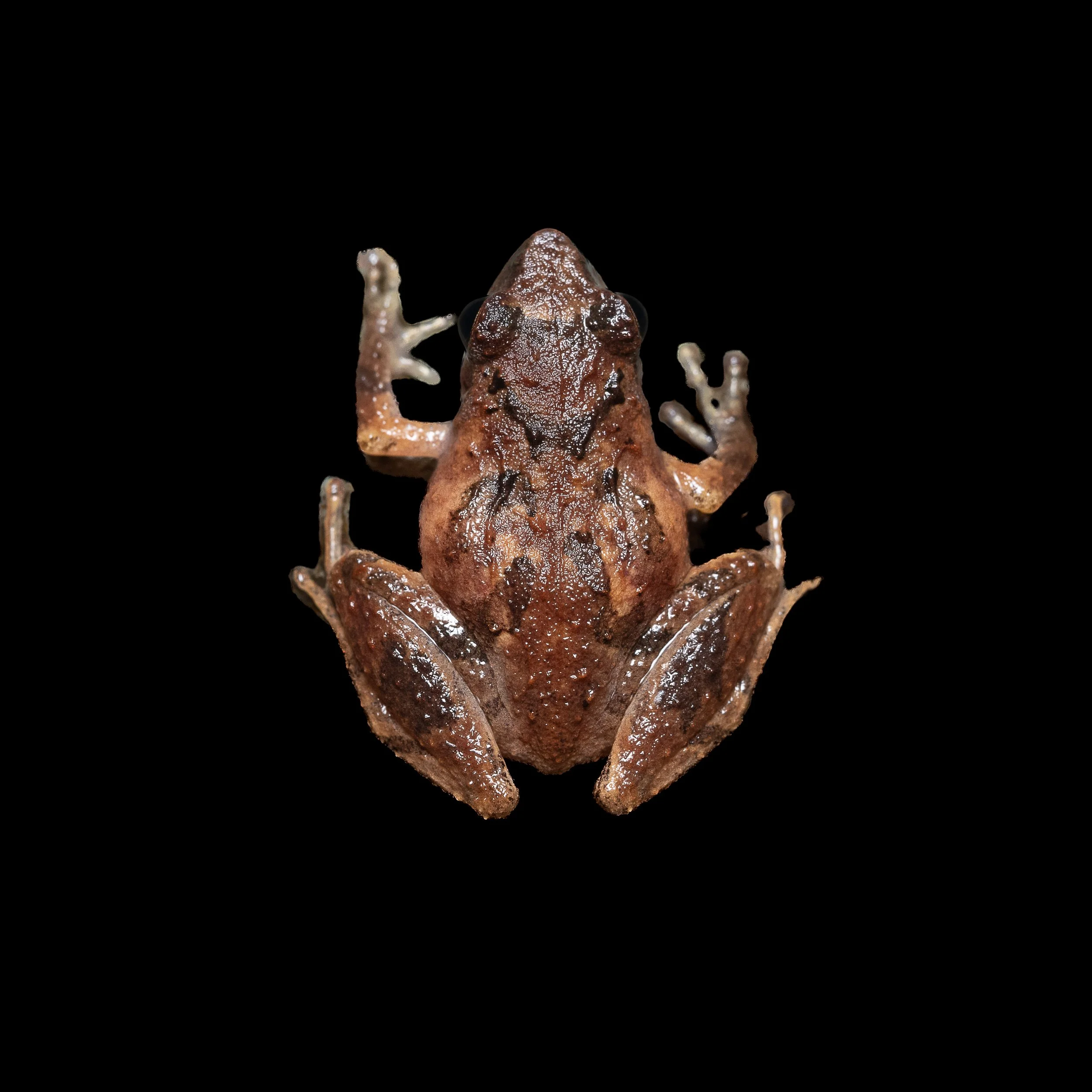
KEY ID FEATURES: Head narrow compared to body, “X” marking on back, reduced webbing on hind feet
SIZE: ~2.5cm
IUCN: Endangered
GALLERY
IMPORTANT: Many frogs have significant variance in coloration and pattern even within the same species. There can also be extreme differences in appearance from juveniles to adults and some species appear very similar in maturity.
DESCRIPTION
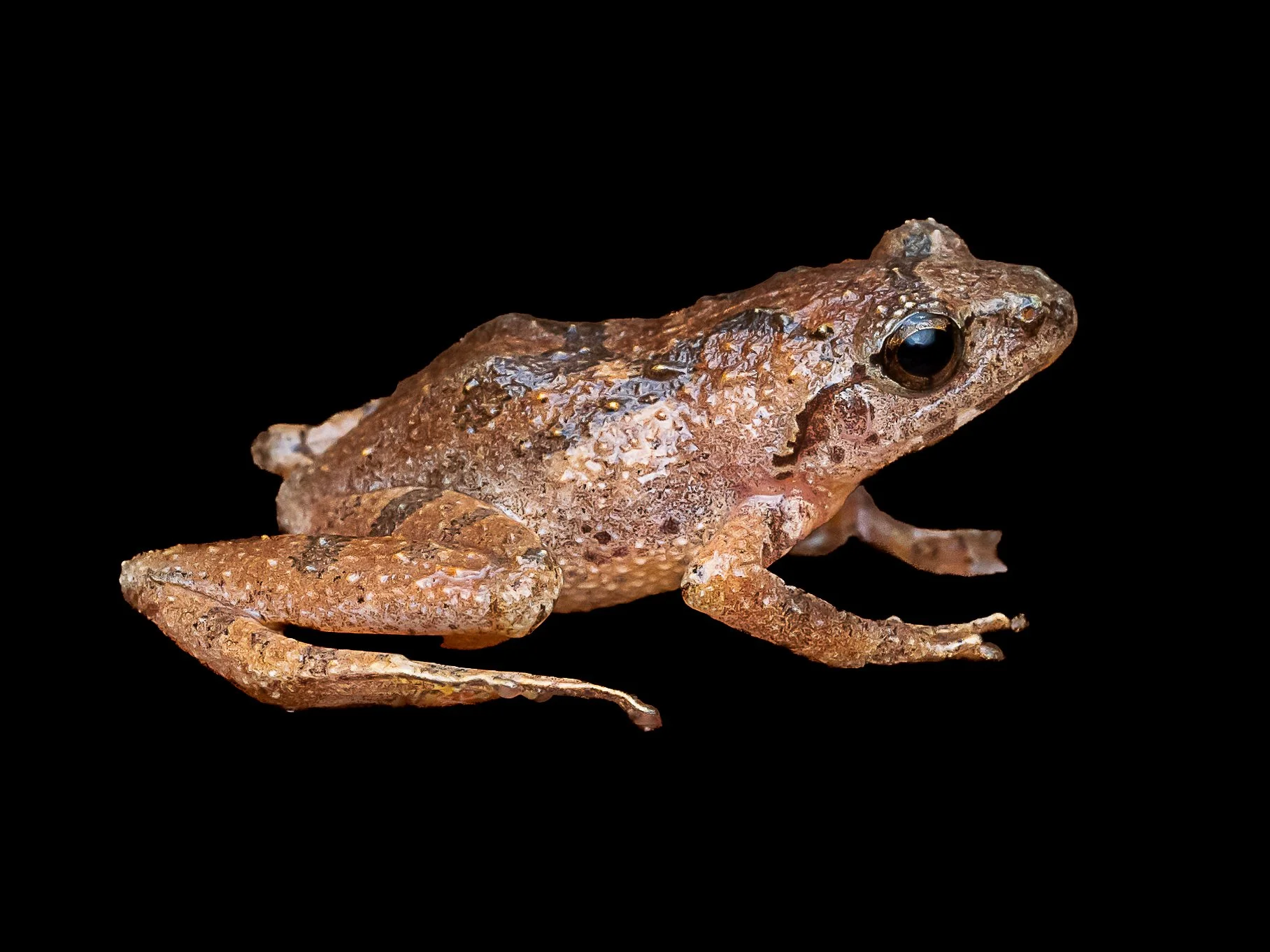
Romer’s range in color from grey to brown to reddish brown. They normally have a characteristic dark “X” mark on their back which is often distinct but occasionally faded. The body is generally smooth with reduced tubercles that largely appear within the “X” marking on the back, though the extent of tubercles may differ with some individuals having more or less. The head is more narrow than the body with a pointed snout. A dark line runs from the tip of the snout down either side of the head, over the eye and getting thicker as it moves back over the tympanum, terminating at the back of the jaw. The forearm joint also often shows a small black stripe that appears like a continuation of the facial stripe. Forearms and hind legs show muted dark bands. The lower jaw often has white and black or dark brown alternating blotches. A muted dark band is often present between both eyes on top of the head. The tympanum is roughly half the diameter of the eye, and is visible but subtle.
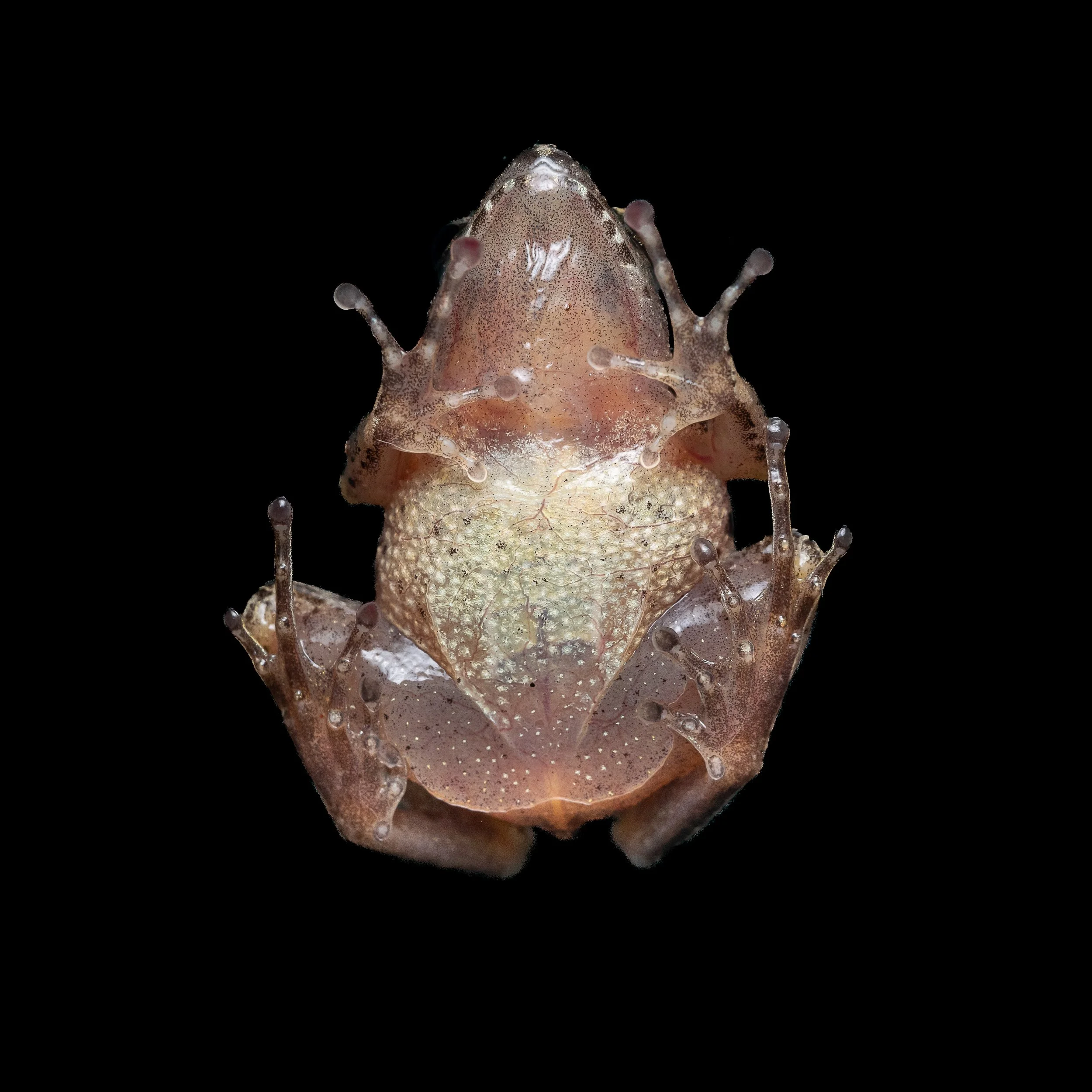
The venter is opaque under the head, forelimbs and hindlimbs with small black flecks. The stomach consists of densely packed light yellow or white spots creating the appearance of a solid white or light yellow color.
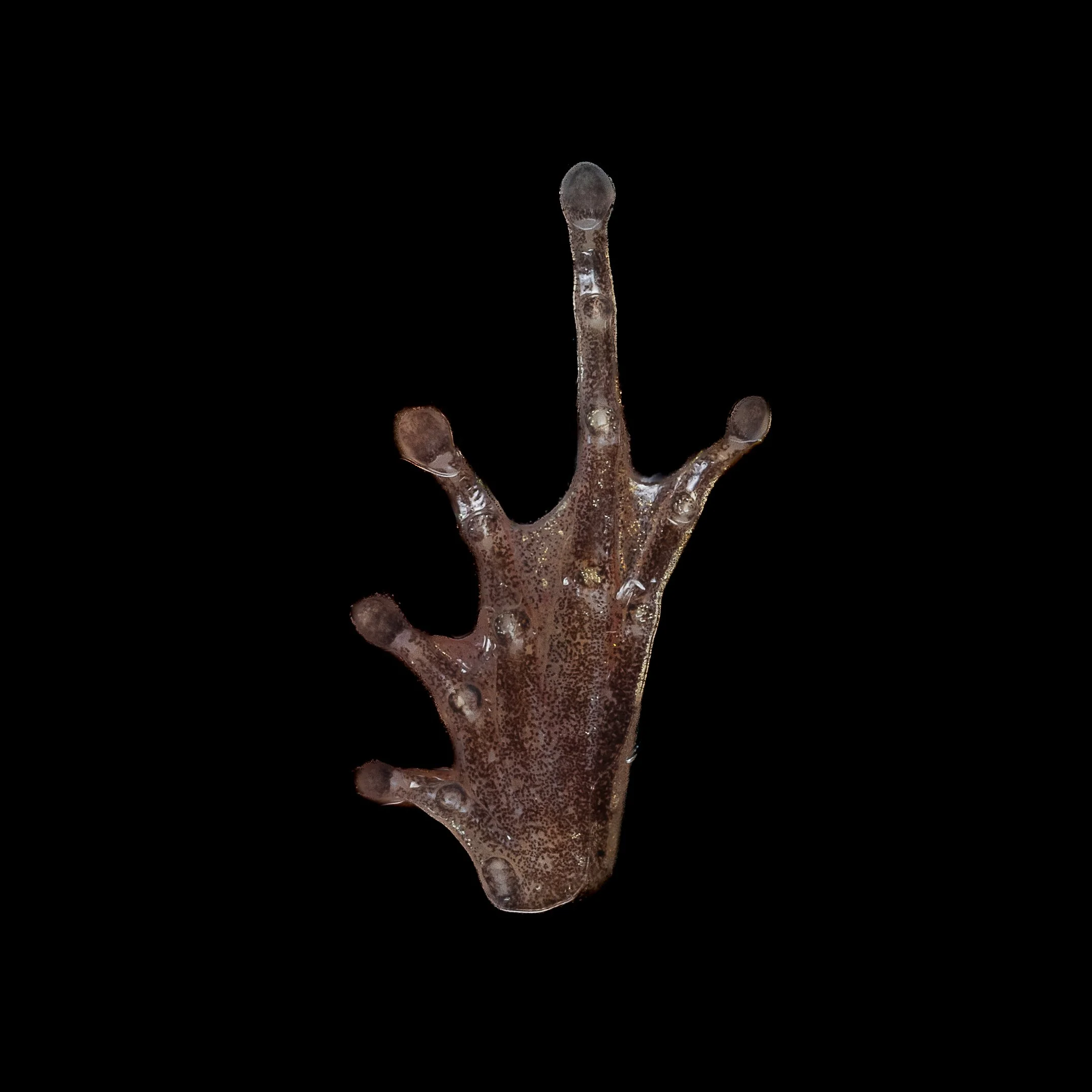
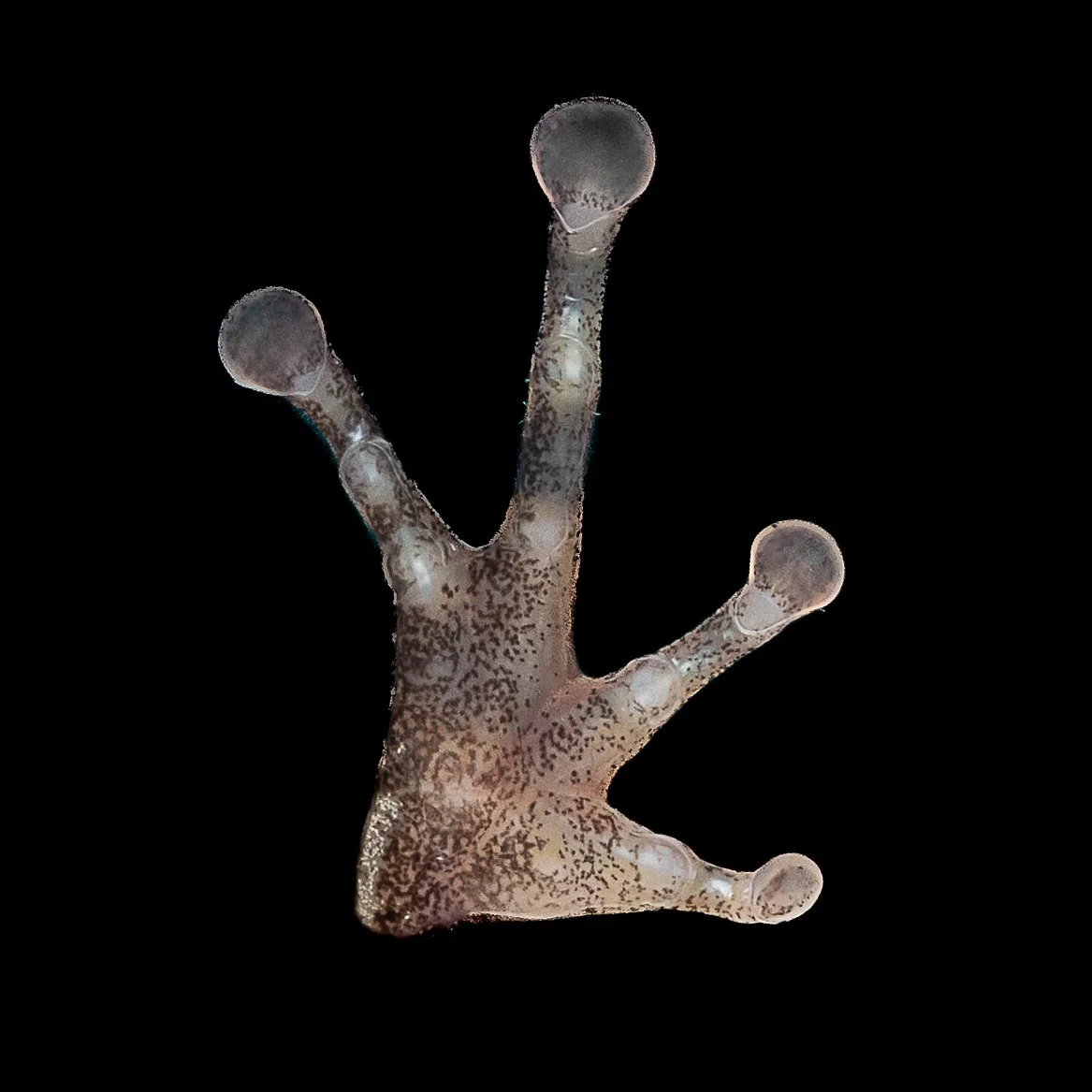
They have four digits on the forelimbs with no webbing present and slightly enlarged toe pads at the tip of each digit. The hindlimbs have five digits and slightly smaller toe pads. Digits on the hind limbs are partially webbed.
HABITAT
Romer’s were initially assumed to be endemic to Hong Kong but additional populations have since been found in Mainland China. Subsequent research and conservation efforts have lead to the Romer’s tree frog benefiting from local protective ordinances in Hong Kong resulting in the species establishing numerous robust breeding populations across the territory, with the additional help of conservationists. As a result, the species is a common encounter for those able to spot the tiny frogs in the wild, though this is not a task the casual observer would necessarily find simple due to their small size and camouflage.
MISTAKEN IDENTITY
CAUTION SHOULD TAKEN WHEN INTERACTING WITH AMPHIBIANS: Romer’s tree frog can look highly similar to the introduced greenhouse frog, both of which maintain widespread stable breeding populations across Hong Kong in similar habitat. There are several distinguishing features to help tell the two species apart, though given their diminutive size, close inspection is required. As with all frogs the two species have distinct calls which can be heard using the respective QR codes. More specifically, the Romer’s body is largely smooth whereas the greenhouse frog is covered in granules and tubercles giving it a rough textured appearance. The Romer’s head is narrow and pointed whilst the greenhouse frogs head is rounded at the snout and roughly as wide as the body. In addition the venter of the greenhouse frog is opaque whilst the Romer’s belly is effectively solid white or light yellow. Finally and most telling, the hind feet are partially webbed on the Romer’s while the greenhouse frog’s are free of webbing.